
Walk into a warehouse without a proper system and you’ll immediately feel the chaos. Staff walk around like treasure hunters, trying to remember where items were last seen. Papers get misplaced. Stock “disappears” only to reappear weeks later. Orders get delayed because the picker couldn’t find the last carton. It’s not because the team is bad — it’s because the system depends too much on human memory.
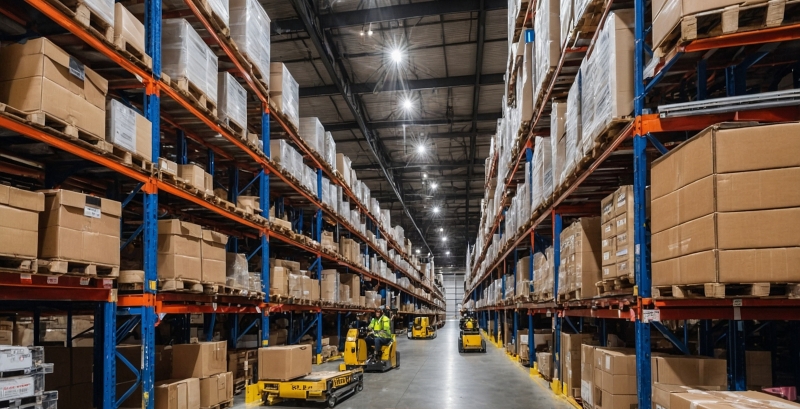
A Warehouse Management System (WMS) changes that entire environment overnight.
Instead of operating like a traditional warehouse, you suddenly have a high-performance engine running the operation. The WMS tracks every movement the moment it happens. Items aren’t “somewhere inside the warehouse” — they are exactly in Bin A-12, Rack 3, verified by scans. This eliminates ghost inventory, double counting, and the classic “I remember got stock but cannot find.”
Let’s start with accuracy. A WMS ensures every item entering the warehouse is scanned, recorded, and stored properly. This alone solves the biggest warehouse pain point: mismatched stock. When you rely on manual input, fatigue or distraction can cause errors. But when everything is verified digitally, the warehouse stops leaking time and money.
Now think about picking. Without a WMS, picking is a slow and inconsistent process. Staff choose their own path, take long routes, and sometimes pick the wrong items. With a WMS, picking becomes guided and optimised. The system chooses the fastest route, highlights the right bin, and even prevents wrong-SKU picking by requiring barcode validation. Suddenly, even new staff can perform like seasoned employees.
Cost reduction is another major advantage. Because everything is automated, warehouses no longer need extra manpower to “control stock,” do repeated stock counts, or redo picking for mistakes. Operations move smoother, and labour productivity increases. Many SMEs even report a 20–40% reduction in labour hours after implementing a WMS — not by firing staff but by redeploying them to more meaningful tasks.
A WMS also improves workflow visibility. Managers no longer rely on reports that are outdated the moment they are printed. Instead, they have dashboards showing live data: which orders are pending, which items are low in stock, which bins are empty, and how fast picking is moving today. Decision-making becomes faster and planning becomes strategic instead of reactive.
Even stock-taking transforms into an easy process. Instead of shutting down operations for days, the team performs cycle counts — small, frequent checks guided by the WMS. Staff scan items, validate counts, and the system updates automatically. No more Excel headaches. No more last-minute panic before audits or peak seasons.
Finally, a WMS improves customer satisfaction. When orders are picked correctly and shipped on time, customers start trusting the brand more. Complaints go down. Repeat orders go up. Your warehouse becomes not just a storage space, but a competitive advantage.
In the end, a WMS does more than organise inventory. It strengthens your entire business backbone, turning chaos into clarity, inefficiency into precision, and uncertainty into confidence.

